
How many grafts can FUE provide in one session?
Depending on donor quality, sessions often range from 2,000 to 4,500 grafts. Larger cases may be split across two days or staged months apart to protect donor integrity.
Gold standard
Follicular Unit Extraction removes individual grafts with minimal scarring and natural density.
2,000€
packages from
24/7
support
3
techniques
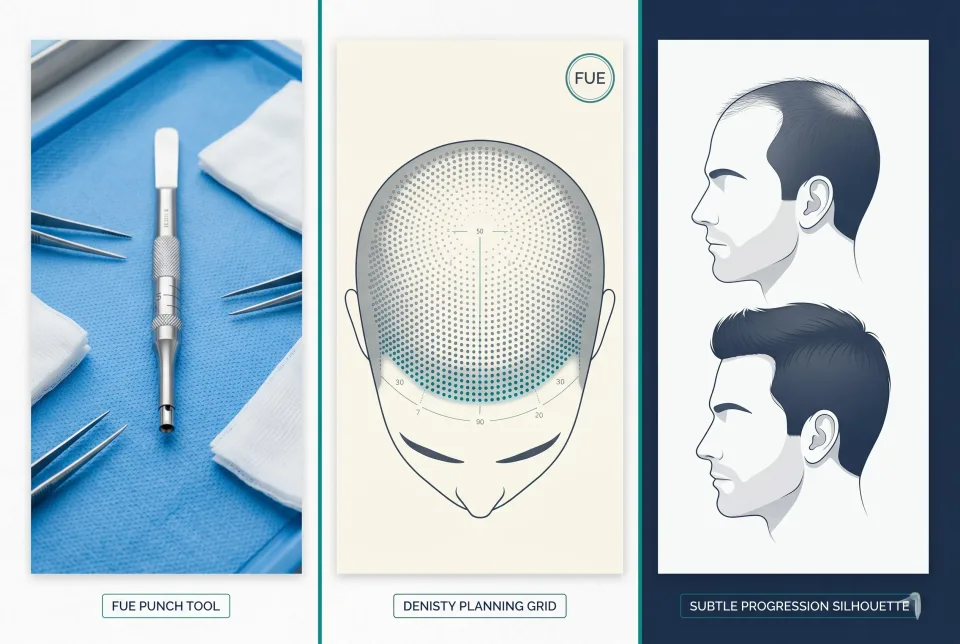
FUE (Follicular Unit Extraction) is the most widely used hair transplant method worldwide. Each follicular unit — typically 1–4 hairs — is extracted individually from the donor area (usually the back and sides of the scalp) using a micro punch, then implanted into thinning or bald zones.
Because FUE does not remove a strip of tissue, it leaves tiny dot scars that are usually hidden once surrounding hair grows back. This makes it suitable for patients who prefer short hairstyles and for large sessions requiring thousands of grafts.
At Turkey Hair Clinic in Levent, Beşiktaş, Istanbul, FUE plans are built around your donor capacity, hair calibre, and long-term hair loss pattern — not a one-size graft count sold to every patient.
Day 1–3
Mild swelling possible; rest, sleep elevated, avoid touching grafts.
Day 4–10
Scabs form; gentle washing per clinic protocol. Most desk work resumes day 3–5.
Week 2–3
Shock loss of transplanted hair is normal — follicles remain beneath the skin.
Month 3–6
New growth becomes visible; texture may be finer initially.
Month 12–18
Mature density and natural blending with native hair.
Depending on donor quality, sessions often range from 2,000 to 4,500 grafts. Larger cases may be split across two days or staged months apart to protect donor integrity.
Local anaesthesia numbs the scalp during the procedure. Most patients describe pressure rather than pain. Mild soreness for a few days afterward is common and managed with prescribed medication.
FUE suits large areas and flexible staging. DHI can offer finer control for hairlines and some no-shave cases. We recommend after reviewing your photos — many patients are good candidates for both.
Send front, top, and donor photos on WhatsApp. We respond in English with a graft estimate and technique recommendation.
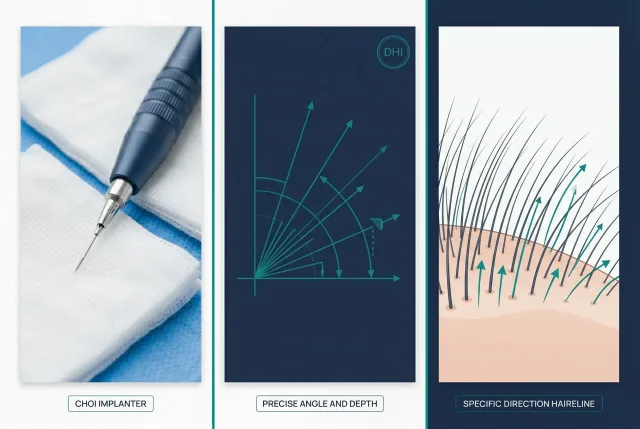
Direct implantation
Choi implanter pens place grafts directly for precise angle control and faster recovery.
Learn more →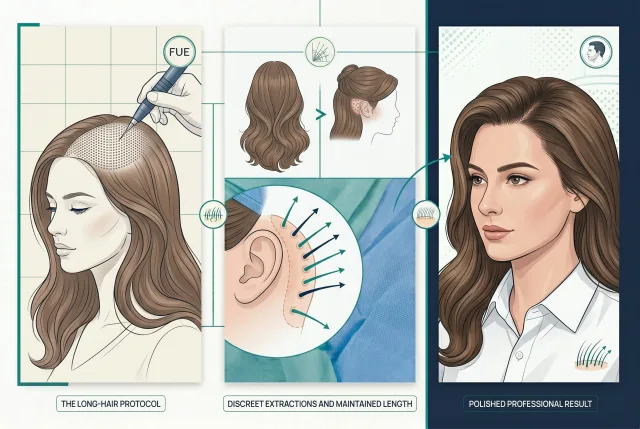
Women & discreet recovery
Long-hair FUE without full shaving — the usual plan for women, professionals, and discreet healing.
Learn more →